

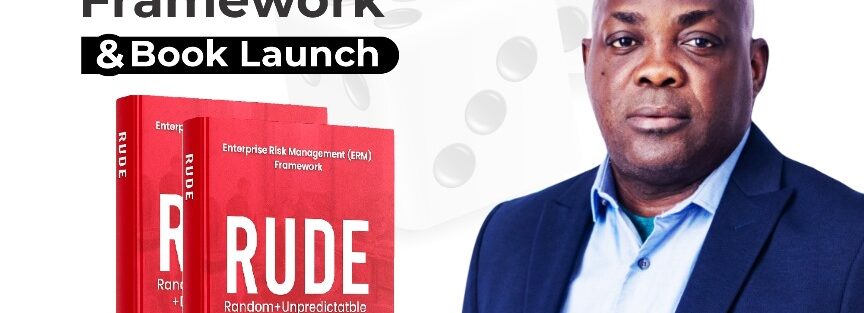
In an era defined by volatility, rapid shifts and persistent uncertainty, experts are urging organisations to reassess how they understand and respond to risk. The global business environment has moved far beyond predictable cycles and familiar patterns, evolving into what analysts now describe as a RUDE world—one that is Random, Unpredictable, Dynamic and Entropic.
These forces, once largely theoretical, now shape crisis briefings, boardroom debates and long-term strategic planning across sectors.
The impact of ignoring this new reality has been visible in repeated global disruptions. Companies that lean on reactive strategies continue to face shocks that develop faster and strike harder than those experienced by earlier generations. Financial instability, supply chain breakdowns, cybersecurity attacks and large-scale reputational crises have shown that risks rarely remain isolated. Instead, they overlap, spread across departments and escalate into wider organisational threats.
A growing school of thought argues that the most effective strategic countermeasure is a CALM response. CALM—Consistent, Anticipatory, Logical and Measured—represents a shift from crisis-driven decision making toward systems that support resilience and steadiness. It encourages organisations to move away from constant firefighting and instead build structures capable of holding firm even when the external environment does not.
A new book exploring this concept lays out a comprehensive risk map that identifies fifty categories of organisational exposure, organised into seven interconnected groups. Rather than a simple checklist, the framework is designed as a living ecosystem. It pushes leaders to stop viewing risks as isolated events and instead see the organisation as an integrated whole in which a single failure can trigger multiple consequences.
These fifty categories provide a diagnostic tool that broadens an organisation’s perspective. Each category highlights a specific vulnerability, but their collective value emerges when analysed together. Patterns develop that no individual team could spot alone. A technical issue might quietly create a reputational problem, which could then influence regulatory attention and ultimately trigger operational disruptions. The framework underscores a central reality of modern business: vulnerabilities are rarely solitary. By visualising risks in this holistic way, organisations gain an early warning system that sharpens judgment, strengthens preparedness and transforms general uncertainty into focused, actionable insight.
The characteristics of the RUDE world reinforce why this expanded perspective is crucial. Randomness reflects shocks that arrive without pattern, limiting the usefulness of historical data. Unpredictability captures the sudden emergence of disruptive forces—from new technologies to shifting cultural attitudes—that can overturn entire industries. The dynamic nature of global systems means decisions taken in one office can ripple across an entire enterprise. Entropy reflects internal decline, including wasted energy, weakening accountability and loss of clarity in purpose.
Each of these threats is countered by the CALM disciplines. Consistency helps organisations absorb random shocks. Anticipation equips them with informed foresight. Logic provides clarity within complexity. A measured approach prevents gradual internal deterioration.
The risks of ignoring this interconnected structure are evident in the typical progression of a cybersecurity breach. What begins as a technical glitch quickly evolves into legal challenges, reputational harm, financial strain and internal cultural damage that erodes trust. Treating such an incident solely as an IT failure prevents organisations from seeing its broader implications. This siloed approach represents one of the key vulnerabilities the RUDE framework seeks to address.
According to the authors, RUDE also creates a common language for institutions that often struggle to communicate across departments. It highlights the connections linking one risk to another and embeds foresight into daily operations, enabling leaders to anticipate how minor disruptions can mature into systemic challenges.
The overarching message from the research is clear: risk management can no longer be confined to compliance routines or emergency manuals. In a RUDE environment, risk becomes more than a threat—it becomes a resource, offering competitive insight and strategic advantage. A robust, integrated risk programme becomes not just a protective brake but a steering mechanism, guiding organisations with greater confidence through increasingly turbulent conditions.
For leaders seeking not only to withstand disruption but to navigate it effectively, the transition from RUDE to CALM is emerging as a strategic priority. The uncertainty of the future remains, but with the right framework, it becomes something that can be monitored, interpreted and managed. The waves of disruption may continue to rise, yet organisations equipped with the CALM approach are learning how to sail through them with greater control and purpose.